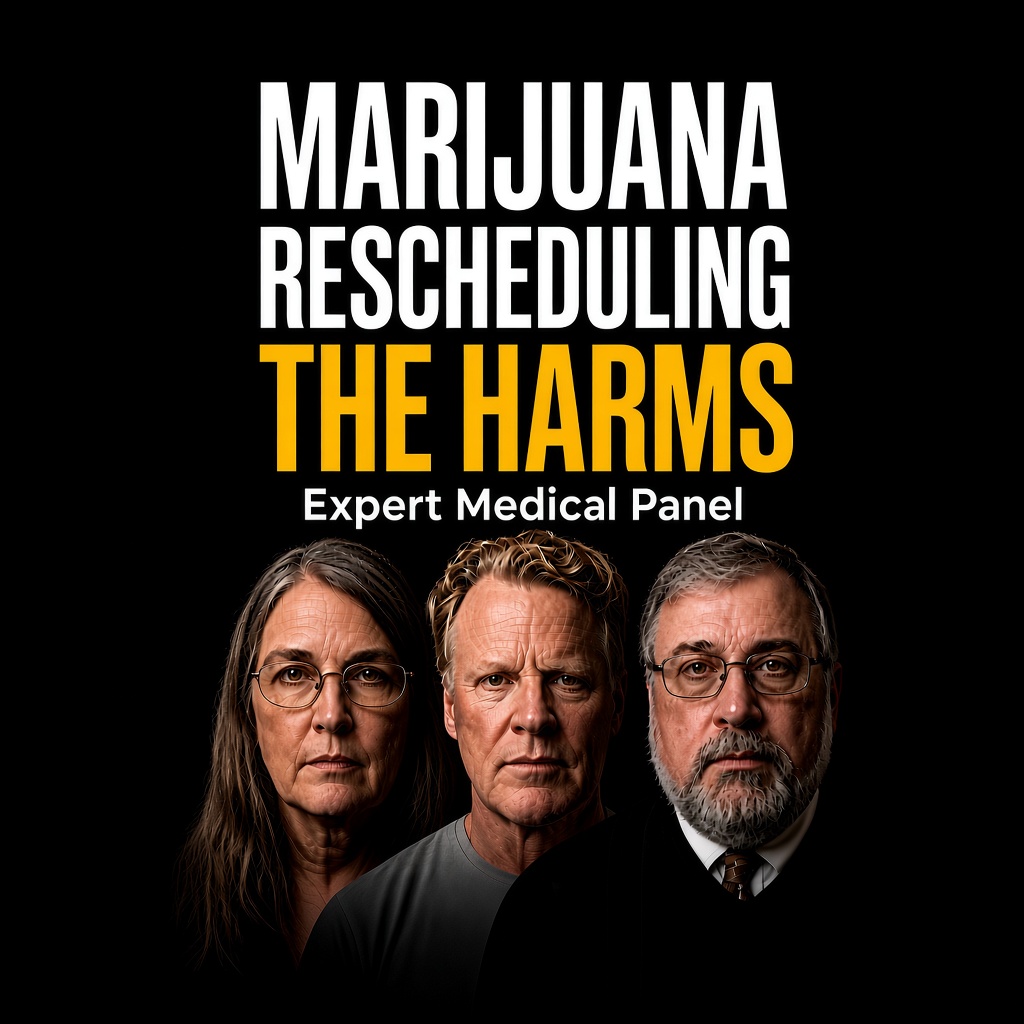


Show Notes
In this powerful and unflinching episode, Dr. Drum joins tour podcast to challenge widely held assumptions about marijuana and to urge listeners to educate themselves before accepting popular narratives at face value. Drawing from years of research, case studies, and firsthand experience, he lays out a detailed picture of the consequences—both intended and unintended—of America’s shifting relationship with cannabis.
The conversation begins with a sobering look at the association between marijuana use and mass murders. Dr. Drum explains why this connection is rarely discussed publicly and why deeper investigation is urgently needed. He argues that without mandatory THC testing in law enforcement and coroner reports, society is missing critical data that could help explain violent behavior and prevent future tragedies.
From there, the discussion moves into the adverse effects of marijuana—not the sanitized version often portrayed in media, but the documented cognitive, psychological, and behavioral impacts that researchers have been tracking for decades. Dr. Drum stresses that despite widespread claims, there is still no solid medical evidence supporting marijuana as a legitimate treatment, and he warns that misinformation has become one of the biggest public health threats of our time.
The episode also explores the complicated world of controlled substance classification and how marijuana’s legal status has created ripple effects far beyond personal use. One of the most surprising areas is the financial sector. Dr. Drum breaks down how legalization has triggered major challenges in the banking system, leaving institutions caught between state laws and federal regulations. The result is a tangled landscape that affects businesses, law enforcement, and public safety. This portion of the conversation highlights why understanding the impact of marijuana legalization on banking is essential for anyone trying to grasp the full picture.
Throughout the episode, Dr. Drum returns to one central message: education is the only defense against misinformation. Whether discussing public health, criminal justice, or financial policy, he makes it clear that citizens must take responsibility for learning the facts, examining the evidence, and questioning narratives that are driven more by culture and commerce than by science.
This episode is not about politics or moral judgment. It is a call to awareness—a reminder that the choices society makes today will shape public safety, health outcomes, and policy for generations to come.